
I Hate to Say It
A few thoughts on a four-letter word

Elizabeth (Betsy) Crowe died, at age 67. She is described as someone who was “gentle yet strong, and hopeful in the face of adversity,” and that is a good way to be, essential actually, because no one gets through this gig without adversity, piles of it, and the only way to handle it is with hope, because the other kind of attitude is “Well, there’s nothing I can do, nobody to help me, so I’ll just curl up here for a while and wait for the feeling to pass.” Not Betsy.
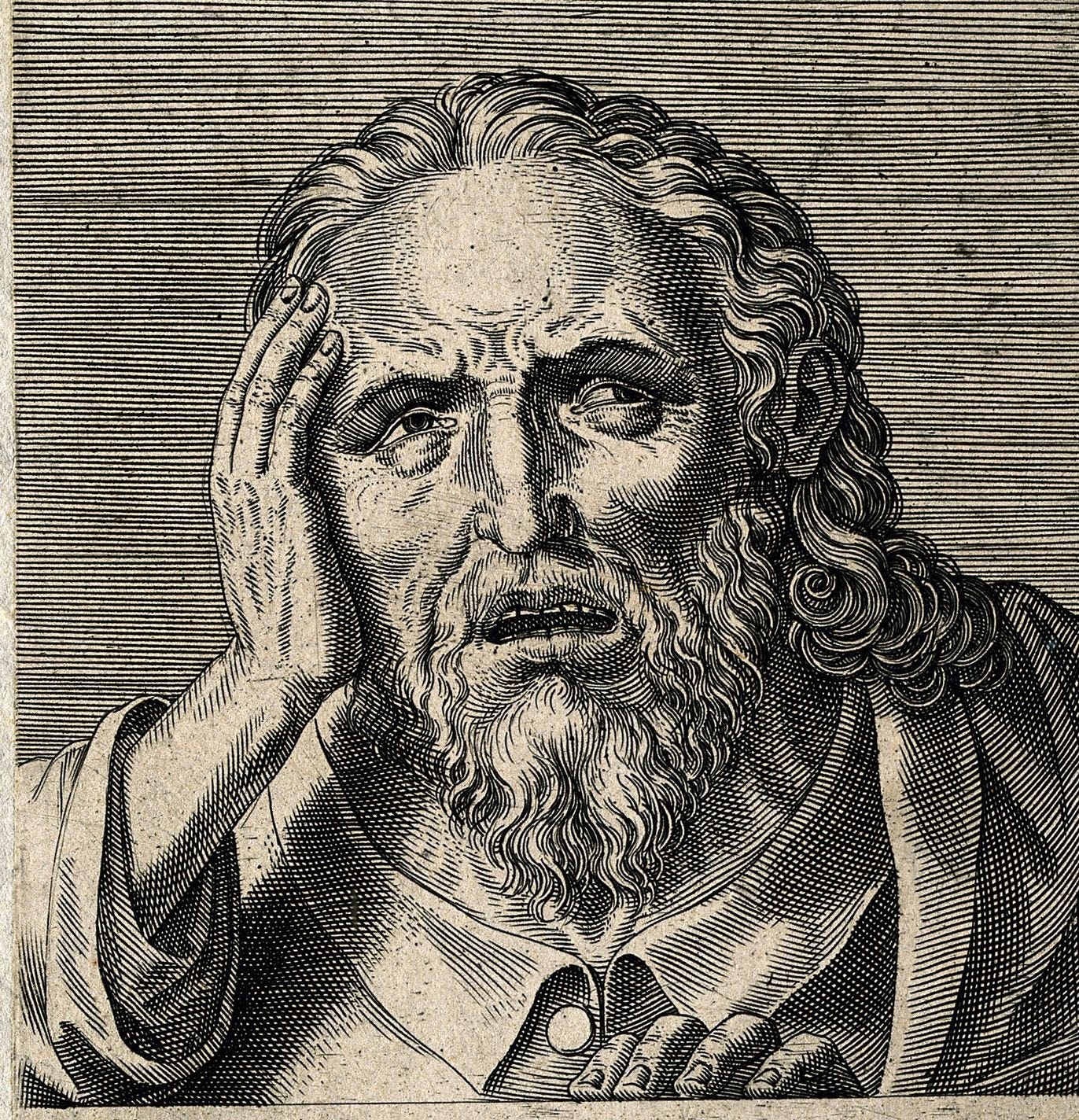
The philosophers have tried to give us hope, except the pessimistic philosophers like Heraclitus (“Life is dark and then you die.”), Thomas Hobbes (“Life is nasty, brutish and short.”), and Erma Bombeck (“If life is a bowl of cherries, what am I doing in the pits?”)
Which reminds me of a cowboy poem by the late Rod McQueary:
Mad Jack’s Dog
It was a short and squatty cabin
Thick dirt roof and round corral.
From the distance, it looked interesting
so I stopped to rest my horse a spell.From around behind the cabin
This wild-eyed old timer came.
Said his name was Mad Jack Hanks.
I shook his hand, told him my name.Said he was up there trappin’ beaver,
And he had the lonesome blues.
Soon he offered bed and breakfast
If I’d share the latest news.I agreed to his proposal,
He seemed glad to have me stay.
He was rustlin’ up some tableware
While I put my horse away.He had the supper goin’
And I hauled in a load of wood.
I shared the latest current events
And things were goin’ good,Till I reached down to pet his ole mongrel dog.
I truly meant no harm.
But before I knew it, that ole wolf
Had bit me on the arm!Now I took it slow and easy
Figured I could make us friends
Cause few dogs can resist my
Shrewd attempts to make amends.But this old wolf just bared his teeth at me
Looked like he might attack.
I finally took the hint and moved
My stool around by Jack.“Mad Jack,” I said, “why does your dog just glare at me with hate?”
He said, “Oh, it ain’t nothin’, yer just eatin’ off his plate.”
Hate is a four-letter word.
They call the Middle Ages the Age of Faith.
They call the Enlightenment the Age of Reason.
I hate to say it, but I think they’re going to call this one the Age of Hate.
It’s not that you can’t legit hate some things. Like black olives on pizza, or boiled Brussels sprouts. The German writer Ludwig Boerne (1786–1837) said, “If you must hate, if hatred is the leaven of your life, which alone can give flavor, then hate what should be hated: falsehood, violence, selfishness.”
What I’m talking about is hating on people. As Jerry Lee Lewis might have put it, “There’s a whole lotta hatin’ goin’ on.” (And for Jerry Lee, there was a whole lotta wivin’ goin’ on, as in seven times. And did you know he was cousins with Jimmy Swaggart? That inspired the Robert Frost poem “Two Cousins Diverged in a Yellow Wood.”)
We all know about this kind of hate. Hang out on X for a few minutes, and you’re awash in it. Nobody is just wrong anymore. They’re “Nazis” or “The Antichrist” or a “Cotton-headed ninny muggins.”
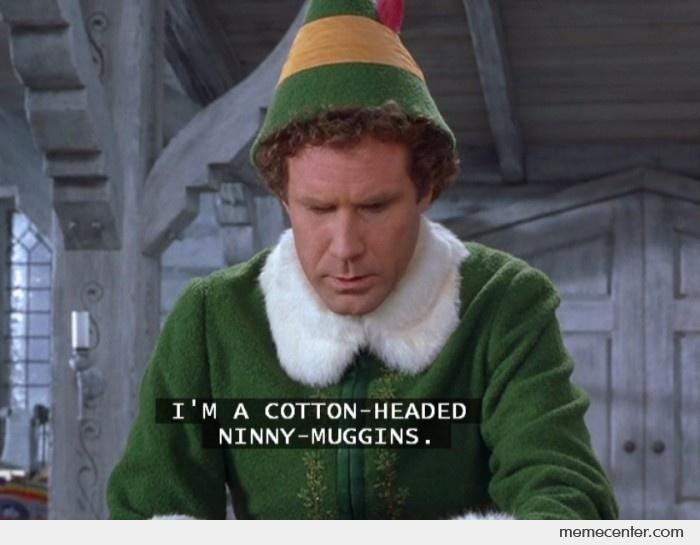
We are seeing the downstream effects of hate, on the streets and college campuses. Hate soaks the brain and shuts off things like reason, empathy, accountability, and a sense of humor. This gives rise to mobs, assassins, and bad jokes.
Once you open the hate spigot, it’s hard to turn it off.
Hate is easy. Love is hard. Hate gives you an instant rush. Love requires effort and sacrifice.
But hate is part of our default settings. “The heart is deceitful above all things, and desperately wicked: who can know it?” (Jeremiah 17:9). In an early John D. MacDonald novel, Weep for Me, the narrator tries to understand himself, why his obsession with a certain woman has turned him from a trusted, reliable bank teller into a thief and a killer:
Perhaps in everyone there is a little river of evil, contained between neat flood walls of convention and conscience. The little river can express itself only in thoughts that are sometimes frightening, impulses that are immediately denied. And then, somehow, the flood wall is breached and evil is uncontained and nothing can ever be the same again.
That’s why we need guardrails on our nature, made of materials like civility and self control. And also why the Founders created a system that doesn’t allow one person, monarch, dictator, oligarchy, or barber shop quartet to have ultimate power in the land of the free. Yet they knew that for this experiment to work, the people would have to regulate their own behavior. On October 11, 1798, John Adams wrote to the Massachusetts Militia:
We have no Government armed with Power capable of contending with human Passions unbridled by morality and Religion. Avarice, Ambition, Revenge or Gallantry, would break the strongest Cords of our Constitution as a Whale goes through a Net. Our Constitution was made only for a moral and religious people. It is wholly inadequate to the government of any other.
People who hate think they’re smart. They hate the right things, don’t ya know, and people who don’t hate those same things are stupid or, worse, dangerous. Thus it is nigh unto impossible to have a reasonable conversation with a hater. They’re too smart, you see?
“Years ago, my mother used to say to me, she’d say, ‘In this world, Elwood, you must be oh so smart, or oh so pleasant.’ Well, for years I was smart. I recommend pleasant.” – Elwood P. Dowd, Harvey
Cicero, that wise old Roman, observed back in 55 B.C., that “men decide many more problems by hate than by reason, or authority, or any legal standards.” Proof of that notion happened when he stood up in the Senate to denounce Marc Antony as a drunkard and a gambler, in the hope that Octavian would take power over Antony, which he did, but then divided up empire rule with Antony, and as a condition Antony demanded the life of Cicero.
Cicero tried to get out of town, but Antony’s soldiers intercepted his carriage. The old philosopher stuck out his head and said, “Here I am, boys, do it quickly.” Or words to that effect. They cut his throat, but that wasn’t enough for hatin’ Antony. He had Cicero’s head and hands cut off and nailed them to the rostrum of the Senate. Oh so unpleasant. But karma kicked in. Antony lost power and the love of his life, Elizabeth Taylor, and fell on his sword.
Let’s keep our heads and try to be more pleasant, shall we?
And did you hear about the mathematician who hates negative numbers? He’ll stop at nothing to avoid them.
Quote
“My plainness of speech makes them hate me, and what is their hatred but a proof that I am speaking the truth?” – Socrates
I long for the days when we could argue, debate, disagree vehemently with each other, then have a barbecue and play volleyball in the back yard. Our divides didn't define our relationships.
I had a friend, Tom, back in college, who was a funny, loud, and sometimes crude sort of fellow. Perhaps he was a bit of a philosopher. He'd often say, "Life is tough, then you die." That sounds remarkably similar to the philosophers' quotes you wrote. He used to do a lot of zany things that made people laugh, like he'd sing a variation of Frank Valli's song "Can't Take My Eyes Off You," except that he changed the lyrics to "I'm just too good to be true. Can't take my eyes off of me. I'm just like heaven to touch. I love me so much..." He also, for some unknown reason, collected empty toilet paper rolls and stacked them in a pyramid in his dorm bedroom. Crazy Tom went on to get his PhD in industrial psychology and became a full professor at the University of Washington. Unfortunately, he passed away a few years ago.